




Rheological applications of polymeric solutions in enhanced oil recovery
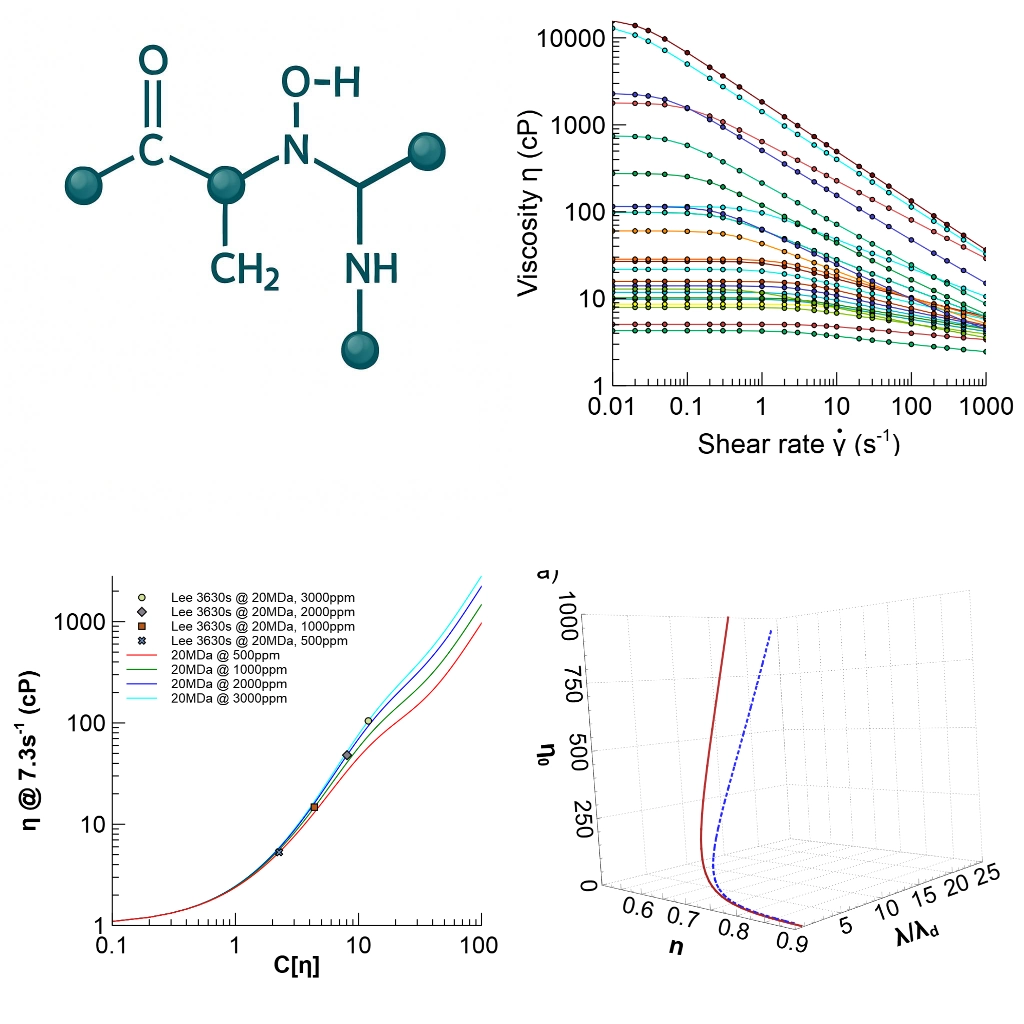
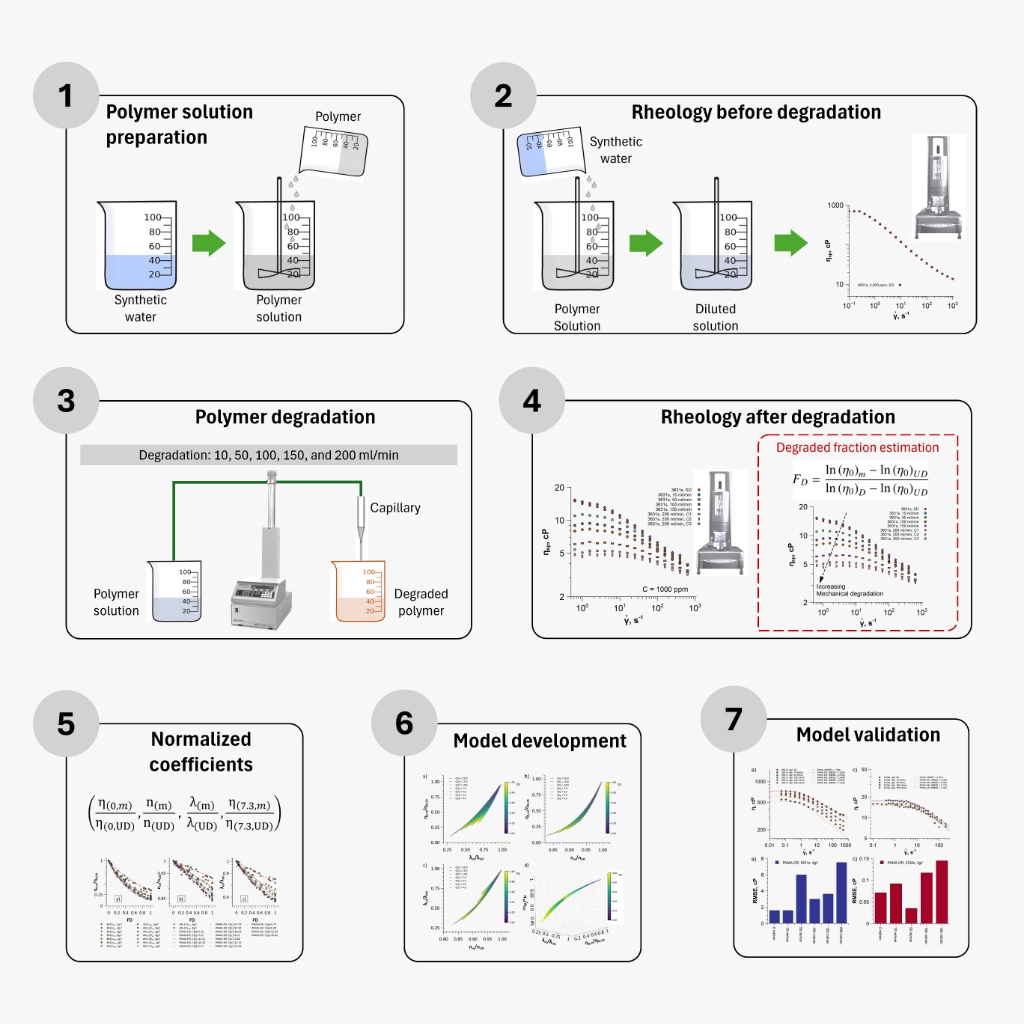
The new method proposed (PAMA) is particularly useful when only Brookfield-type viscometers are available. In its standard configuration, this apparatus allows only the measurement at 7.3 s^-1 to be carried out. The methodology we propose enables the evaluation in the field of the full rheological curve (viscosity against shear rate) of HPAM solutions.
We use an approach that allows to know the rheological curve by using existing tools in the field. Under the hypothesis of the implementation of universal viscosity models involving the estimation of the superposition parameter C[η], with a single measurement in conventional viscometers at a shear rate equal to 7.3 s-1.
Featured White Papers. If you are interested in learning more about the technology, read these scholarly papers
This methodology provides the coefficients of the Carreau-Yasuda Law when the temperature of the solutions is close to 25 °C.
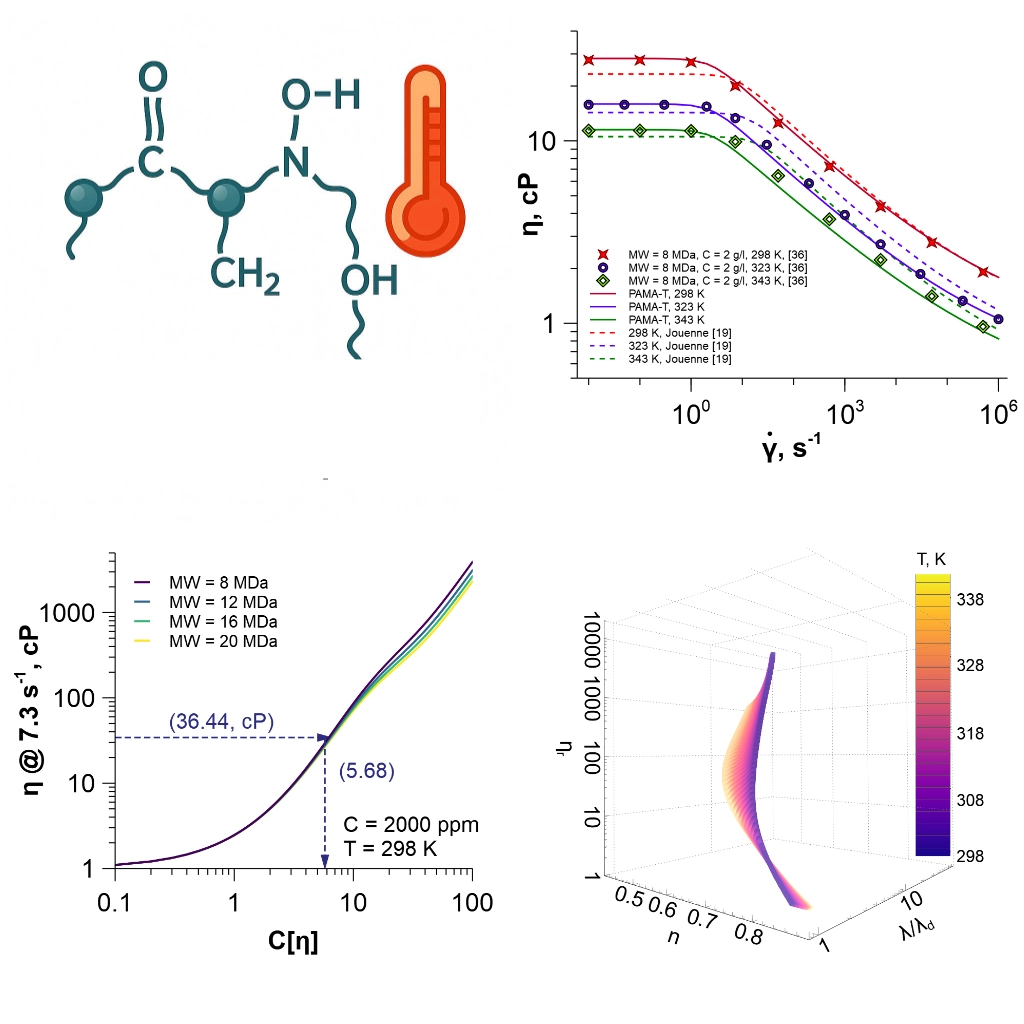
Useful for predicting the rheological behavior of polymeric solutions when they are encountered between 25 and 70 °C at any surface or bottom reservoir facility.
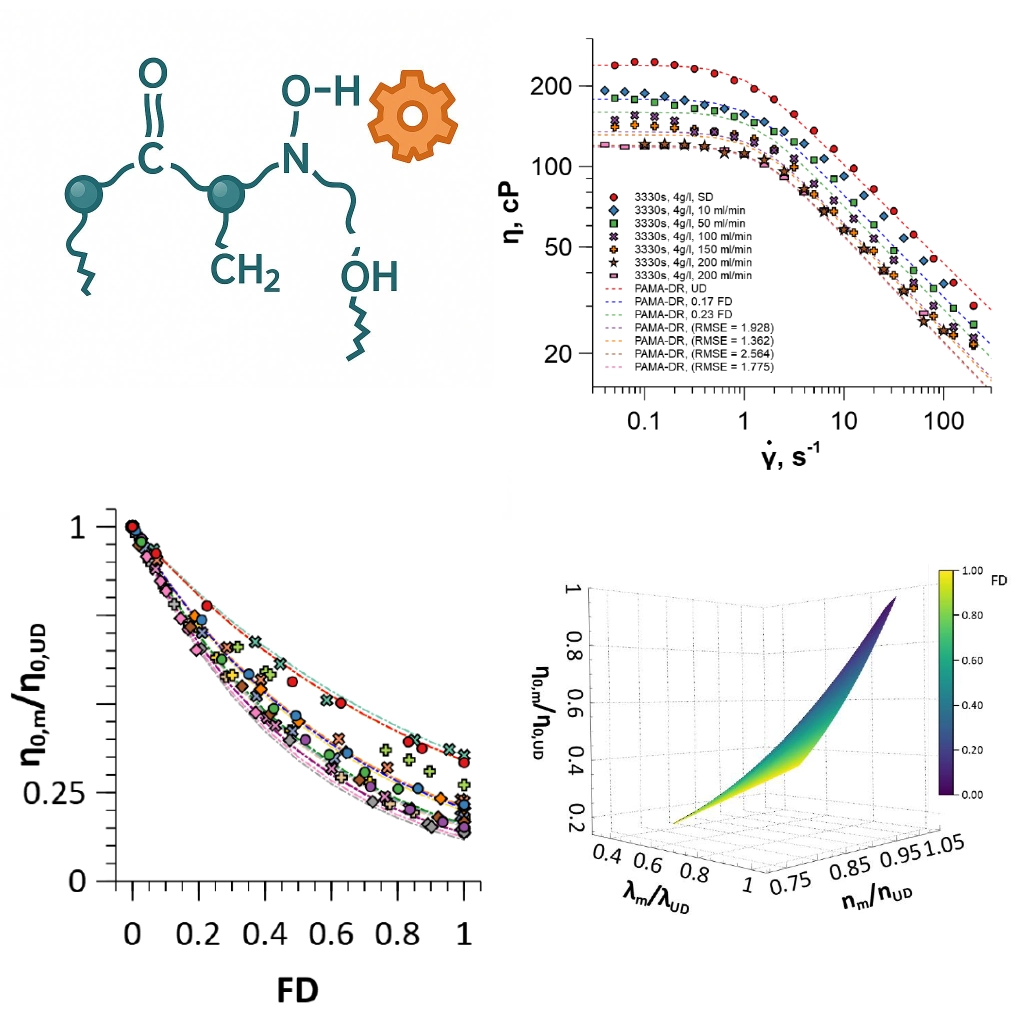
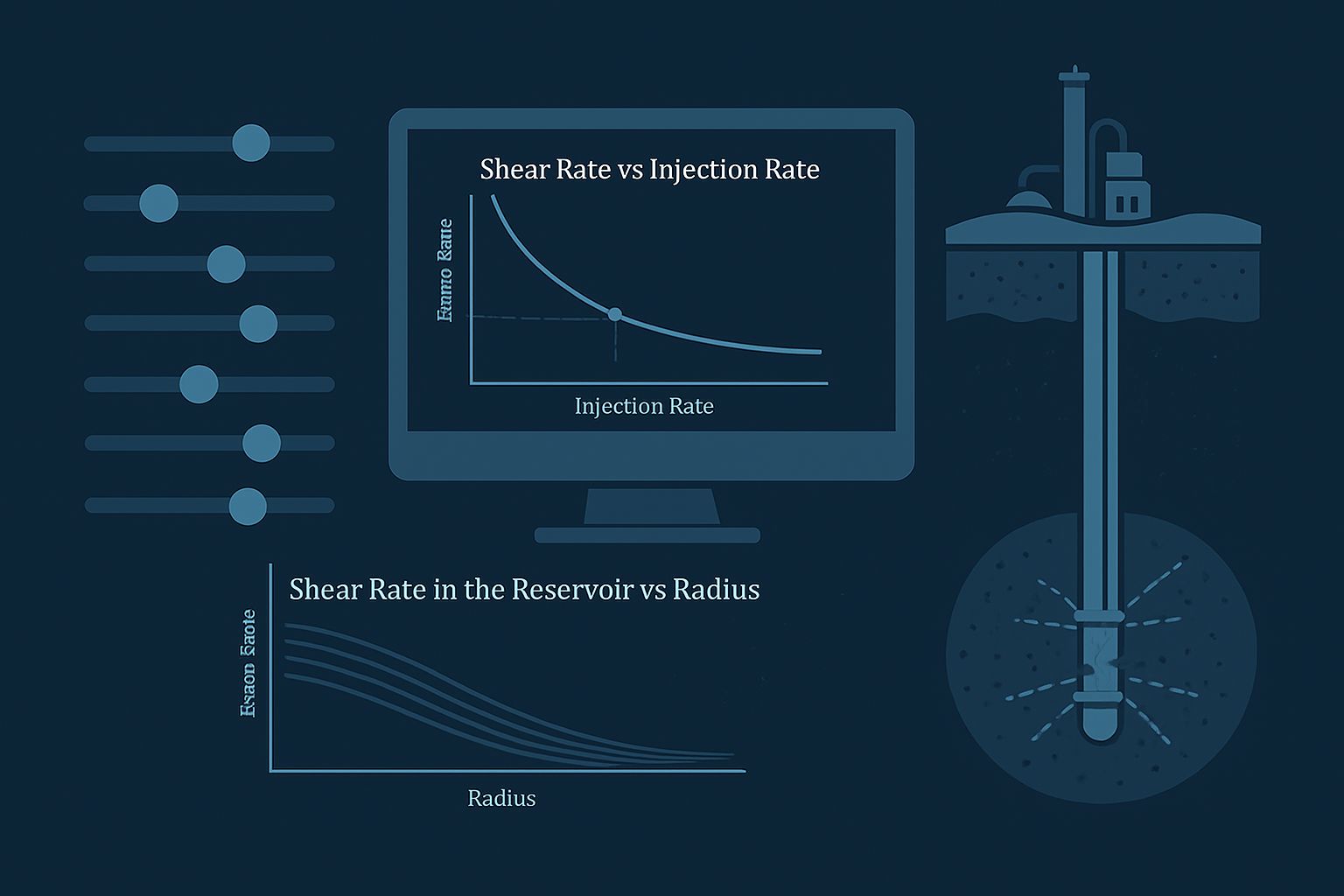
This complementary tool for PAMA calculates and visualizes the shear rate generated when injecting fluids through perforations in vertical wells and evaluates both shear in the perforations and radial shear in the reservoir. This helps reservoir specialists feel more confident in their operational decisions by providing clear insights into actual parameters and potential mechanical degradation. The dashboard also allows users to adjust flow rates and completion properties to compare scenarios and understand how each variable affects shear, facilitating operational decision-making that minimizes damage and optimizes injection.